
The Real Truth About Cocoa Powder: Natural vs. Processed
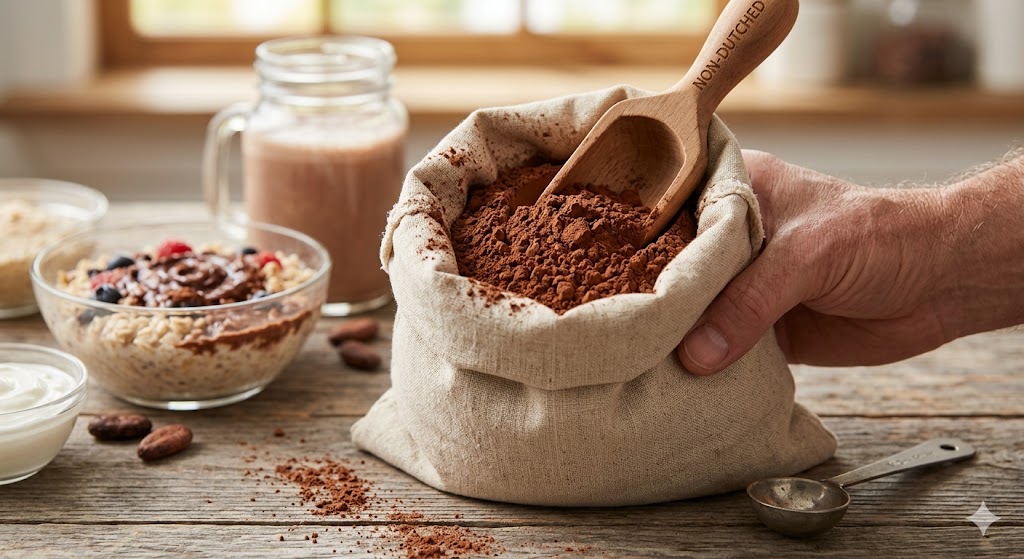
When you are striving for consistency in your wellness routine, every ingredient matters. If you regularly add a scoop of chocolate flavor to your morning smoothies or post-workout shakes, you might think you are getting a pure hit of antioxidants. However, the type of cocoa powder on your kitchen counter drastically changes the nutritional value you actually receive.
To maximize your health benefits and keep your nutrition tracking accurate, it's essential to understand the raw truth about cocoa powder — specifically, why non-Dutched natural cocoa powder reigns supreme over highly processed alternatives.
What is Non-Dutched Natural Cocoa Powder?
Pure cocoa powder starts its journey as harvested cacao beans. Once these beans are roasted and cold-pressed to remove the fatty cocoa butter, the remaining solids are ground into a fine powder.
When left in its closest state to nature, this is known as natural, non-Dutched cocoa powder. It features:
- A lighter, reddish-brown color
- A sharp, intensely fruity, and slightly acidic flavor profile
- An uncompromised nutritional profile packed with active compounds
Because it undergoes minimal processing and contains no added sugars or artificial sweeteners, natural cocoa powder preserves the complex, bitter notes of the original bean alongside its robust health properties.
The Processing Pitfall: What is "Dutching"?
Many commercial chocolate brands use a chemical alteration method called the Dutch process (or alkalization). Invented in the 19th century, this process washes the cocoa beans in an alkaline potassium solution to neutralize their natural acidity.
While Dutching creates a darker, mellower powder that blends easily into liquids, it comes at a massive nutritional cost. The chemical processing strips away the vibrant, natural properties of the bean, leaving you with a structurally altered ingredient that looks rich but is biochemically depleted.
Natural Cocoa vs. Processed Chocolate: The Nutrient Showdown
If your fitness and nutrition goals rely on clean, high-performance fuel, natural cocoa is a clear winner over heavily processed chocolate.
| Feature | Natural, Non-Dutched Cocoa | Processed Dutch Cocoa / Chocolate |
|---|---|---|
| Antioxidant content | Exceptionally high; rich in active flavonoids | Drastically reduced due to alkalization |
| Sugar & sweeteners | Zero added sugars; purely unsweetened | Often loaded with sugars, milk solids, or additives |
| Acidity level | Naturally acidic (pH 5.3–5.8), complex fruit notes | Neutralized (pH 7–8), flat uniform taste |
| Best used for | Nutrient-dense smoothies, clean baking, wellness shakes | Standard commercial desserts and sugary cocoa mixes |
Why Pure Cocoa Fits a Sustainable Health Routine
Achieving long-term wellness isn't about rigid perfection; it's about making sustainable, high-quality choices consistently. Incorporating an authentic, unsweetened ingredient like natural cocoa powder gives your body clean support without the blood sugar spikes associated with processed chocolate.
By avoiding artificial sweeteners and chemically altered powders, you ensure that what you log in your daily nutrition tracker is genuinely serving your muscle recovery, metabolic health, and overall performance. Next time you restock your pantry, flip the label over, skip the alkalized options, and reach for pure, non-Dutched natural cocoa.
Ready to track every clean ingredient you put into your body? Try the free calculator and start logging your nutrition the Phoenix way.