
Beyond Bodybuilding: Why Creatine is Essential for Muscle Retention and Brain Health
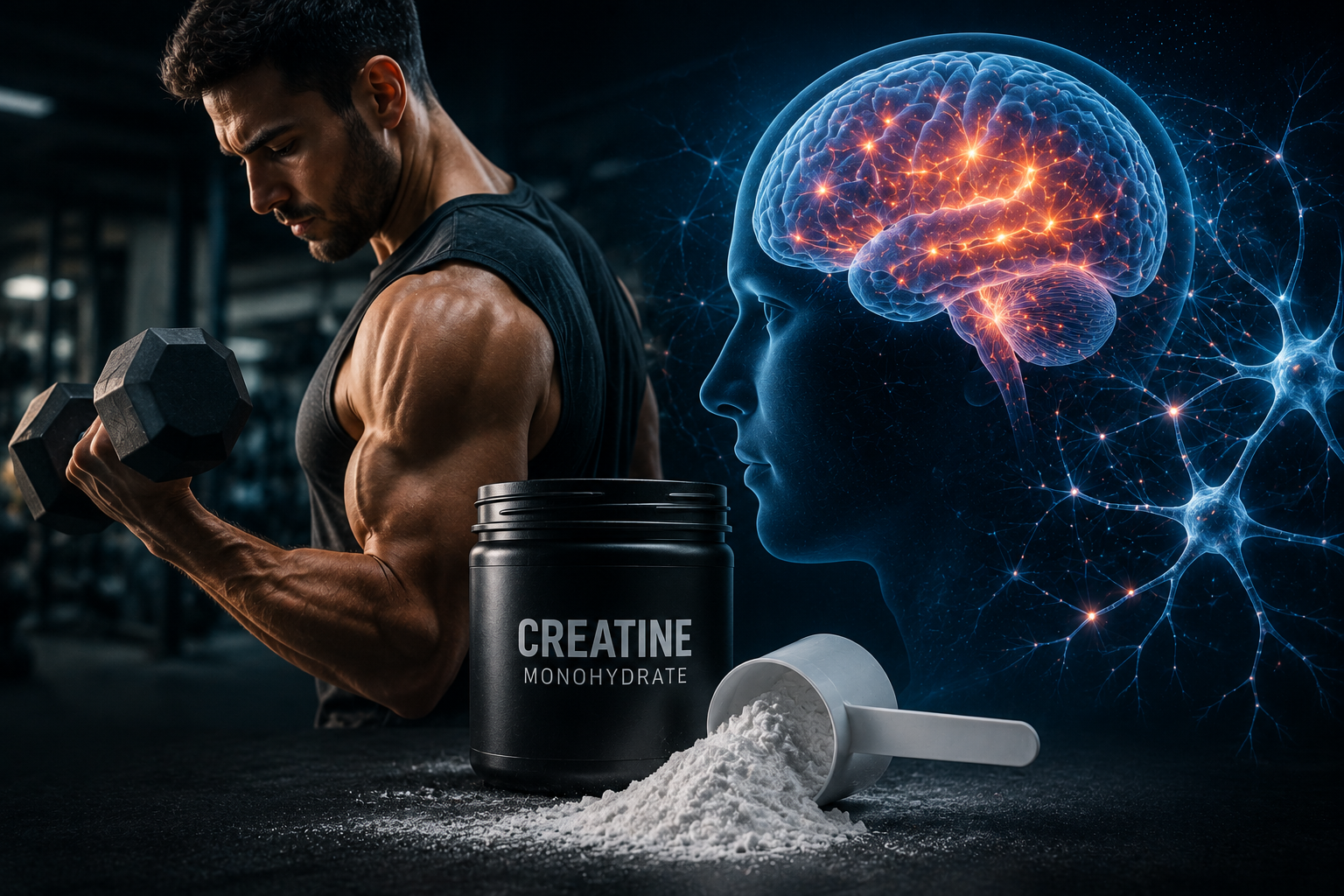
For decades, creatine monohydrate was pegged as a supplement strictly for gym bros, bodybuilders, and elite sprinters trying to add power.
If you are over 30 and non-bodybuilding, you might have assumed creatine isn't for you. But modern clinical research has completely rewritten that story.
Today, researchers view creatine not as an athletic trick, but as an essential metabolic health tool for adults over 30—particularly for preventing age-related muscle loss (sarcopenia) and protecting cognitive function.
What Happens to Your Biology After 30?
Beginning around age 30, human biology undergoes a subtle shift. Unless actively countered, adults lose roughly 3% to 8% of their muscle mass per decade, a process that accelerates after age 50.
Along with muscle loss comes a gradual reduction in cellular energy production.
Muscle Tissue: Muscle cells experience lower phosphocreatine stores, leading to faster muscular fatigue and slower recovery.
Brain Tissue: The brain—which accounts for roughly 20% of the body's total energy consumption—begins experiencing subtle declines in bioenergetics, especially during periods of high stress or sleep deprivation.
Creatine directly addresses both ends of this energetic decline.
Muscle Retention: The Anti-Sarcopenia Powerhouse
Muscle isn't just for appearance; it is your primary organ of longevity. Skeletal muscle functions as a metabolic sink for glucose, supports joint health, and maintains physical independence as you age.
Creatine helps preserve and build muscle after 30 through three core mechanisms:
1. Recharging ATP for High-Output Movement Every time your muscles contract during a workout or daily task, they use adenosine triphosphate (ATP) for energy. ATP breaks down into ADP (adenosine diphosphate) and loses a phosphate group. Creatine donates its stored phosphate back to ADP, rapidly regenerating ATP so your muscles can keep working with power.
2. Cellular Hydration & Nutrient Uptake Creatine draws water into your muscle cells (intracellular hydration). This expanded cell volume acts as an anabolic signal to your body, stimulating muscle protein synthesis while reducing muscle breakdown.
3. Boosting Resistance Training Quality By allowing you to perform 1 to 2 extra reps per set during strength training, creatine maximizes the mechanical tension your muscles experience—the single most important driver for maintaining muscle mass as you age.
Cognitive Health: Fueling the Brain’s Energy Grid
While its effects on muscle are well known, creatine's impact on cognitive health is where the newest, most compelling science lies.
Your brain relies heavily on ATP to power neurotransmitters, maintain neural communication, and clear cellular waste. Just like muscle tissue, brain tissue stores phosphocreatine to handle sudden energy demands.
Key Brain Benefits for Adults Over 30: Fights Mental Fatigue: Studies show creatine supplementation helps maintain working memory and cognitive sharpness during complex tasks, particularly when fatigued or sleep-deprived.
Supports Brain Bioenergetics in Women: Research suggests women may experience pronounced cognitive benefits from creatine due to hormonal fluctuations throughout life that affect brain energy dynamics.
Neuroprotective Support: By supporting mitochondrial energy production in neural tissue, creatine acts as a protective buffer against cellular stress in the brain.
How to Take Creatine: Dosing & Best Practices
Creatine is the most thoroughly researched sports nutrition supplement on earth, with hundreds of peer-reviewed studies confirming its safety and efficacy for long-term daily use.
Here is how to implement it simply:
The Form: Stick with standard Creatine Monohydrate. It is the most studied form, highly bioavailable, and the most affordable. You don't need fancy buffered or liquid versions.
The Dosage: Take 3 to 5 grams daily.
Do You Need a Loading Phase? No. While taking 20 grams a day for 5 days saturates your cells faster, taking 3–5 grams daily reaches full saturation in about 3 to 4 weeks with zero digestive friction.
Timing: Consistency matters far more than timing. Take it whenever it easily fits into your daily routine—mixed into your morning water, coffee, or post-workout smoothie.
The Phoenix Tracker Pro Perspective
At Phoenix Tracker Pro, we believe health optimization after 30 is about protecting your functional independence and cognitive vitality.
Supplements should never replace foundational habits like eating adequate daily protein, hitting step targets, and lifting weights 3 times a week. But when added to a solid foundation, creatine monohydrate is one of the highest-return daily micro-habits you can build.
Track your daily supplement habit right alongside your protein and workout metrics, and protect your muscle and mind for decades to come.